
Reliable Medical Devices Exporter in Europe | Global Supply
The May 28, 2026, EUDAMED mandatory registration deadline has fundamentally shifted the risk profile for every medical devices exporter Europe currently utilizes. Procurement teams often struggle with fragmented supply chains for high-end cardiology and surgical hardware. A single documentation error can halt an entire shipment of sensitive implants. You likely recognize that maintaining a steady inventory of Drug-Eluting Stents or Pacemakers requires more than just a vendor. It demands a partner capable of navigating current Notified Body bottlenecks and the strict Class III MDR compliance deadlines that went into effect in May 2026.
This guide provides a technical roadmap for sourcing premium technology from global brands like Medtronic, Terumo, and Boston Scientific through established European and international channels. You'll learn how to secure a consistent supply of CRM devices and PTCA Balloon Catheters while minimizing lead times through strategic regional hubs. We examine the specific logistical requirements for sensitive implants and the protocols necessary to ensure 100% regulatory documentation accuracy. The following sections detail the inventory management strategies and compliance frameworks required to maintain a reliable flow of authentic clinical hardware in an increasingly regulated market.
Key Takeaways
- Navigate the 2026 European export landscape by utilizing consolidated B2B wholesale models and multi-regional distribution hubs.
- Ensure 100% regulatory accuracy by identifying the MDR and ISO 13485:2016 requirements essential for a medical devices exporter Europe to operate.
- Develop a sourcing strategy for Tier-1 manufacturers including Medtronic, Boston Scientific, and Terumo to secure high-demand cardiology and surgical inventory.
- Master cold chain integrity and specialized handling protocols for sensitive hardware like Drug-Eluting Stents and permanent pacemakers.
- Optimize global logistics by leveraging strategic regional hubs in Poland, Turkey, and Dubai to facilitate rapid supply to over 50 countries.
The European Medical Device Export Landscape in 2026
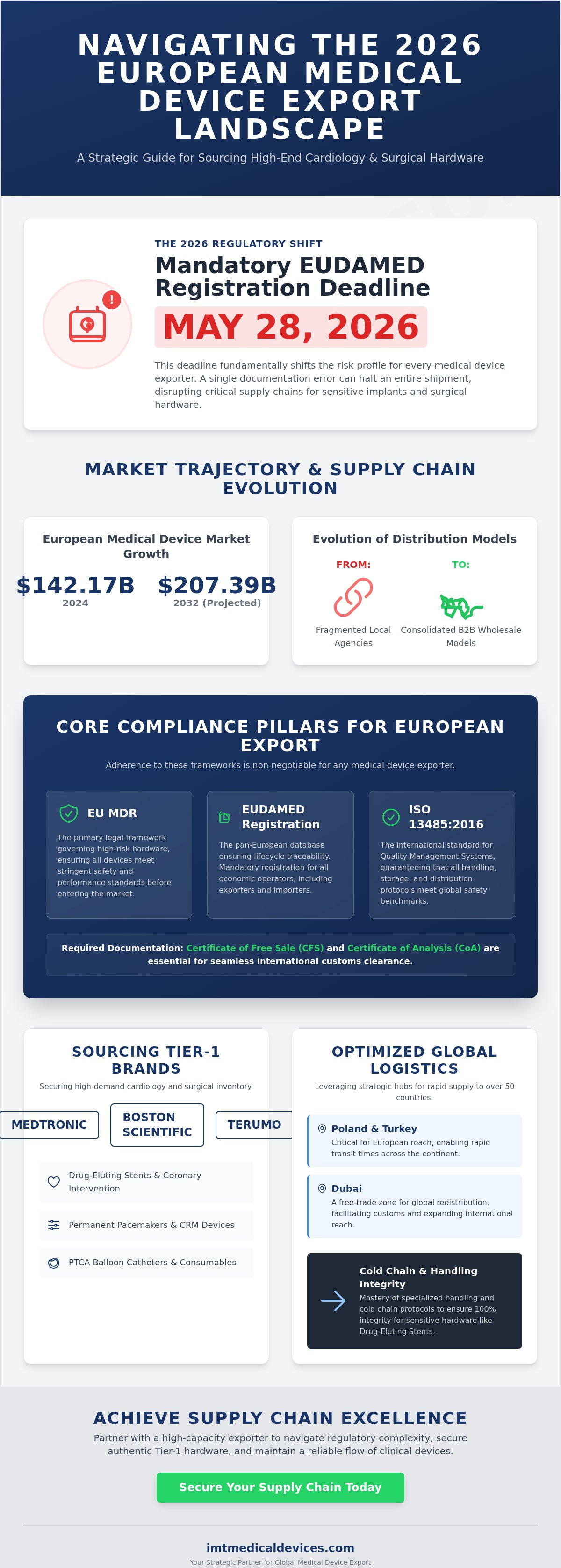
A medical devices exporter Europe operates as a high-capacity logistics bridge. This entity manages the transfer of specialized clinical hardware across international borders. In 2026, the definition of an exporter is strictly tied to compliance with the EU Medical Device Regulation (MDR) and mandatory EUDAMED registration. The European medical device market reached a value of USD 142.17 billion in 2024. It continues to expand toward a projected USD 207.39 billion by 2032. This growth is driven by a shift toward consolidated B2B wholesale models. Multi-regional distribution hubs now replace fragmented local agencies to ensure supply chain resilience.
Global supply chain stabilization in 2026 has improved the availability of premium medical technology. Third-party exporters play a vital role in bridging the gap between US-based manufacturers and European healthcare providers. They manage the complex regulatory documentation and specialized shipping requirements that manufacturers often outsource. This includes handling high-demand inventory such as Medtronic products and Boston Scientific hardware. By consolidating orders, exporters provide smaller regional providers with access to Tier-1 brands that might otherwise be restricted by direct-purchase minimums.
Key Market Drivers for Medical Exports
Demand for specialized coronary intervention hardware is surging. Eastern Europe and Central Asia are primary growth areas. Poland is currently the fastest-growing country market in the region. Private healthcare sectors in these territories require rapid inventory turnover to maintain operational efficiency. They cannot afford the long lead times associated with traditional procurement. Additionally, the growth of medical tourism hubs requires consistent access to premium brands. These facilities use high-end devices like Drug-Eluting Stents to attract international patients seeking advanced care standards.
The Role of Strategic Distribution Hubs
Strategic distribution hubs are essential for modern medical logistics. Proximity to major transport corridors in Poland and Turkey is critical for European reach. These locations allow for rapid transit times across the continent. Many exporters also leverage free-trade zones like Dubai for global redistribution. These zones facilitate the movement of PTCA Balloon Catheters and other consumables without immediate customs burdens. Localized inventory in these hubs reduces lead times for high-turnover items. It ensures that critical hardware is available exactly when clinical demand peaks.
Regulatory Compliance and MDR Standards for European Export
Operating as a medical devices exporter Europe requires strict adherence to evolving legal frameworks. Compliance isn't optional. As of May 28, 2026, registration in the European Database on Medical Devices (EUDAMED) is mandatory for all importers and exporters. This ensures every device model is registered before entering the market. A high-capacity distributor must also maintain ISO 13485:2016 certification. This standard governs quality management systems for wholesale and distribution operations. It guarantees that handling, storage, and transit protocols meet international safety benchmarks. You can review specific European Medicines Agency (EMA) guidance to understand the oversight for combined products and high-risk hardware.
Documentation for cross-border transit must be precise. Certificates of Free Sale (CFS) and Certificates of Analysis (CoA) are essential for clearing international customs. These documents prove that products are legally sold in the EU and meet technical specifications. For high-risk Class III implants, traceability is the priority. Every unit must be tracked through its entire lifecycle. This includes permanent pacemakers and Drug-Eluting Stents. Failure to provide accurate documentation results in immediate seizure at border checkpoints. It's vital to verify that your partner has the administrative capacity to manage these files.
MDR Impact on Export Logistics
The EU Medical Device Regulation (MDR) has changed the logistics landscape. Class III custom-made implantable devices faced a full compliance deadline on May 26, 2026. Other Class III devices must hold a valid MDR certificate by December 31, 2027. Exporters must manage Unique Device Identification (UDI) data for every shipment. This data allows for rapid recalls and safety monitoring. An Authorized Representative often facilitates these transactions for non-EU manufacturers. They ensure that technical files are accessible to national authorities. Accurate UDI management prevents delays during the redistribution of coronary intervention supplies.
Customs and International Compliance
Navigating customs in Turkey and Georgia requires localized expertise. These regions often have regulatory alignment with European standards but require specific national filings. MENA region requirements frequently mirror EU MDR protocols. This alignment simplifies the export of high-value shipments. However, regulatory delays remain a significant risk. Working with an experienced partner helps mitigate these bottlenecks. You can examine our compliance framework to see how we maintain 100% documentation accuracy for international transit. Proper alignment between European standards and destination requirements ensures that specialized hardware reaches clinical settings without interruption.
Sourcing Strategy: Accessing Tier-1 Medical Brands
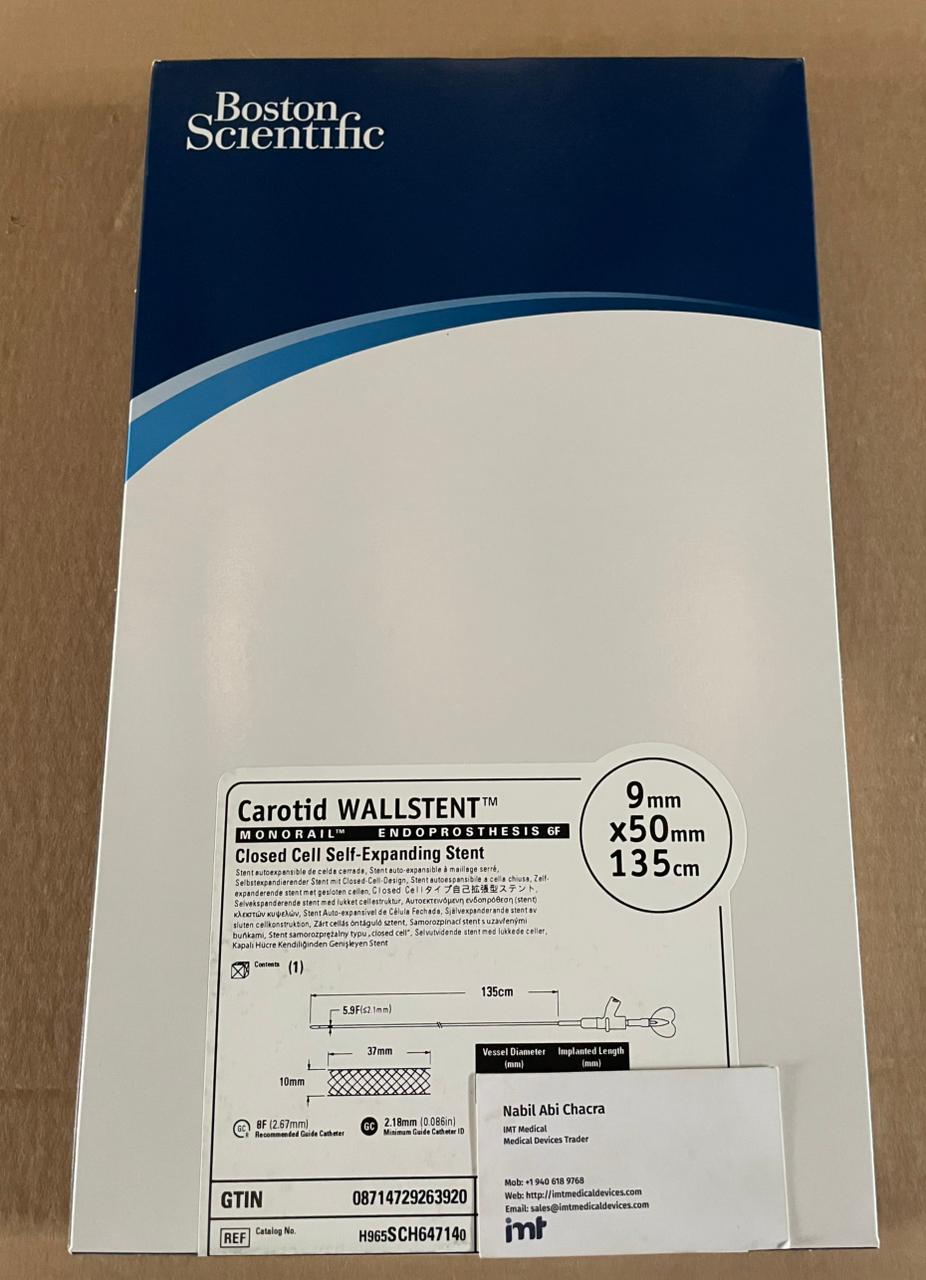
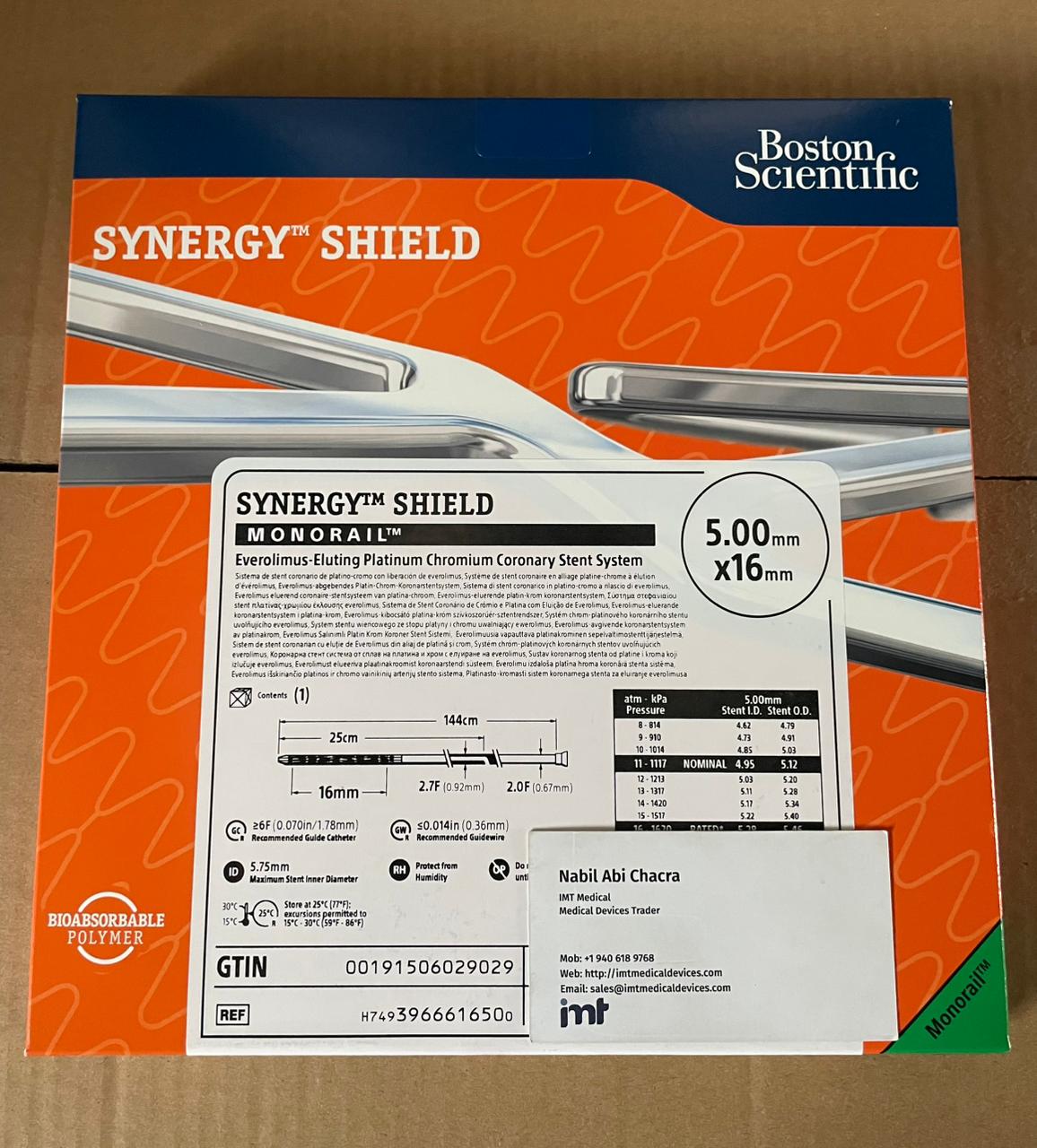
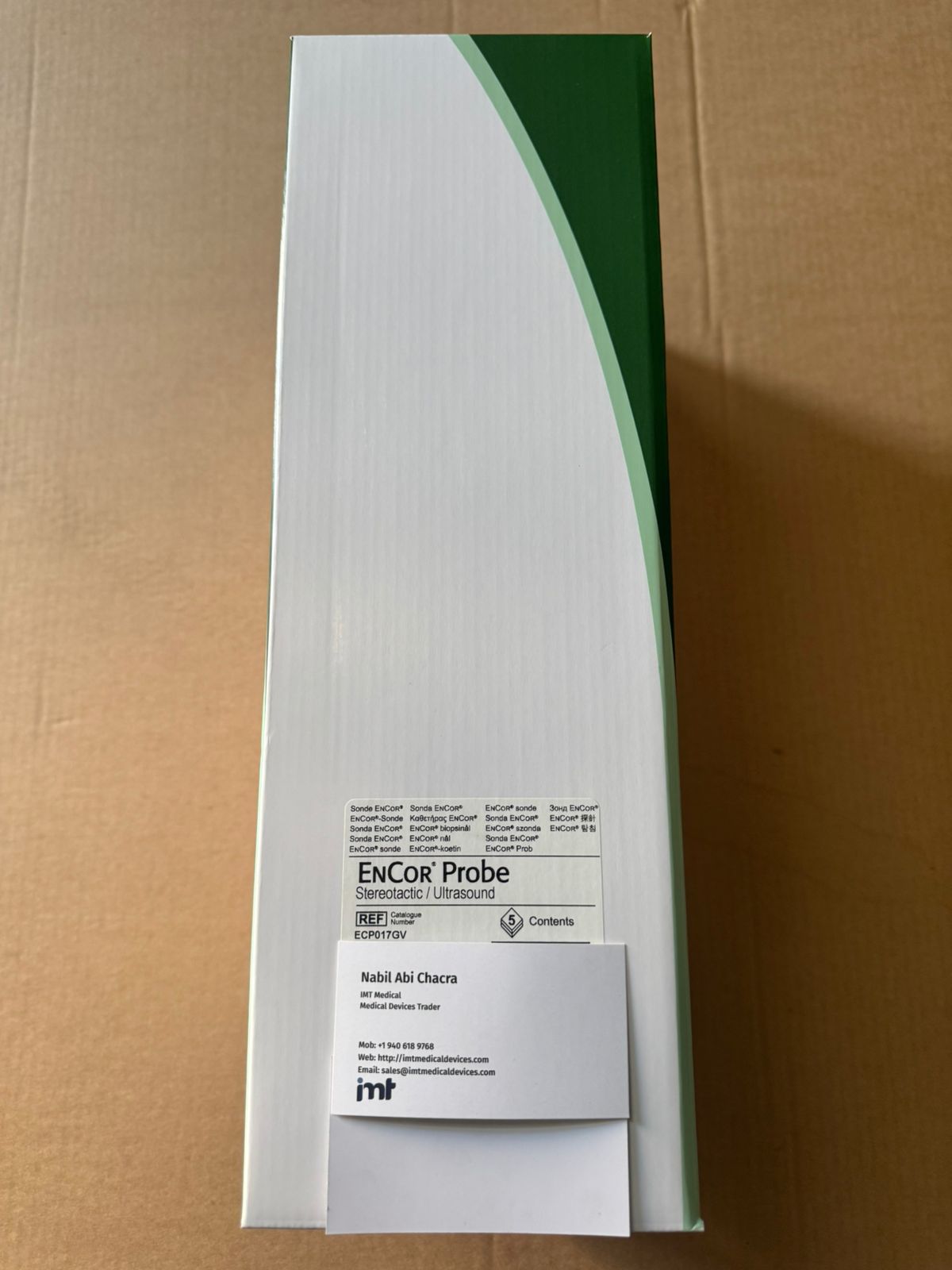
A medical devices exporter Europe serves as a primary access point for Tier-1 clinical technology. Procurement professionals must evaluate exporters based on their manufacturer portfolio depth. This includes consistent access to global leaders like Medtronic, Boston Scientific, Abbott, and Terumo. Choosing between direct and indirect procurement models depends on volume and regional restrictions. Direct manufacturer contracts often carry rigid minimum order quantities. In contrast, indirect wholesale models allow for flexible, multi-brand consolidation. This flexibility is critical when managing bulk inventory for high-demand items like Drug-Eluting Stents. Brand-centric sourcing for Permanent Pacemakers ensures that hospitals receive authentic, factory-sealed hardware with full serial number traceability.
Efficient sourcing requires a data-driven approach to inventory. High-capacity exporters maintain ready stock of essential interventional hardware. This reduces the risk of clinical downtime. By leveraging a medical devices exporter Europe with an expansive logistical network, buyers can bypass the lead times typically associated with factory-direct orders. The focus remains on product availability and technical identifier accuracy. This creates a reliable bridge between prestigious manufacturers and international healthcare markets.
Interventional Cardiology Portfolio
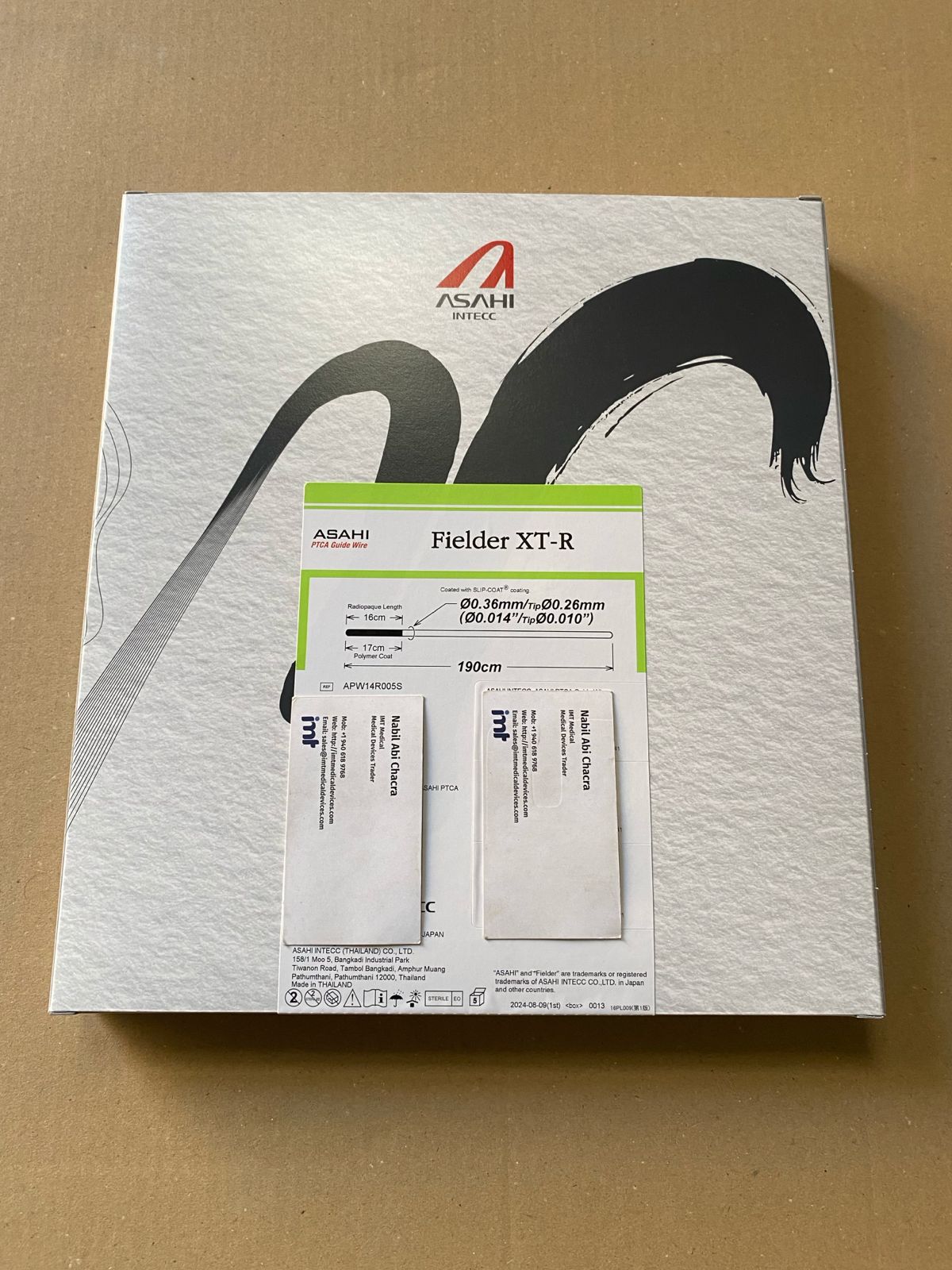
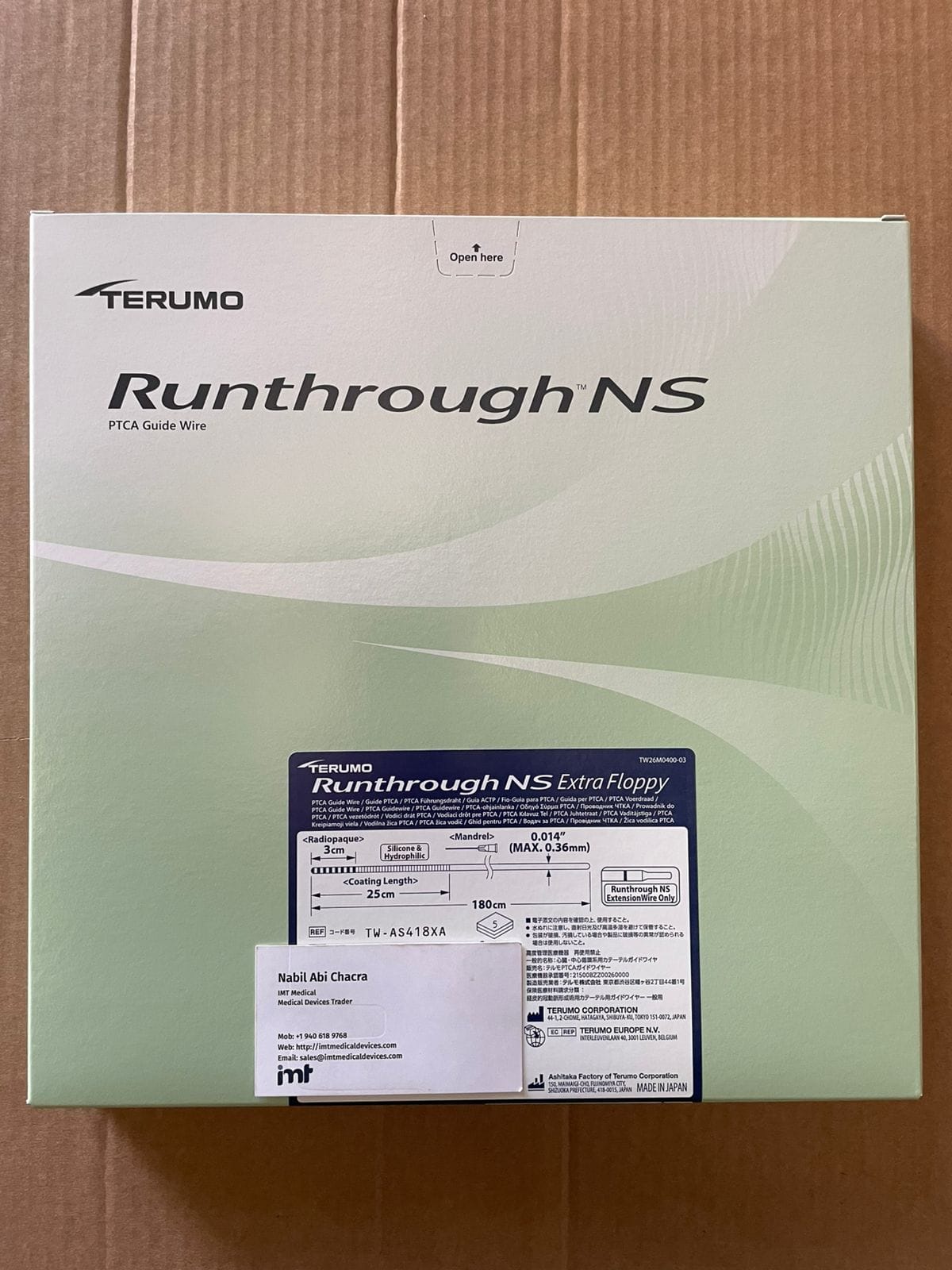
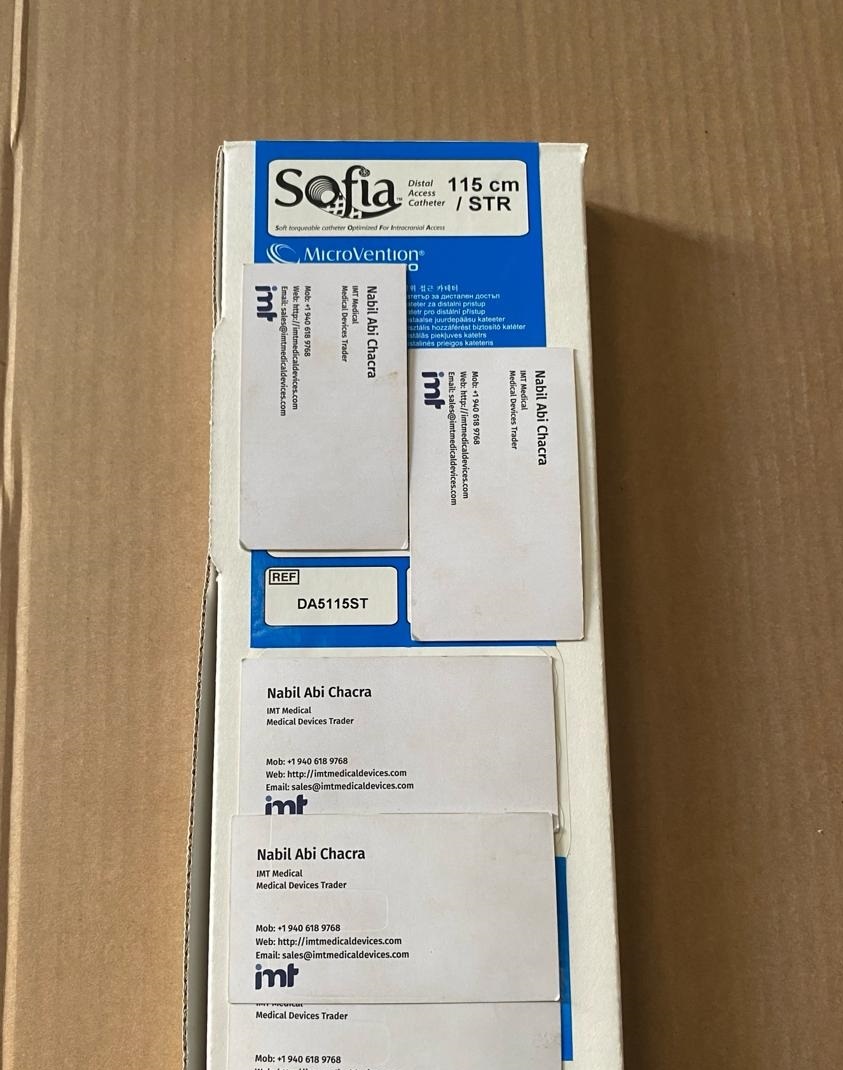
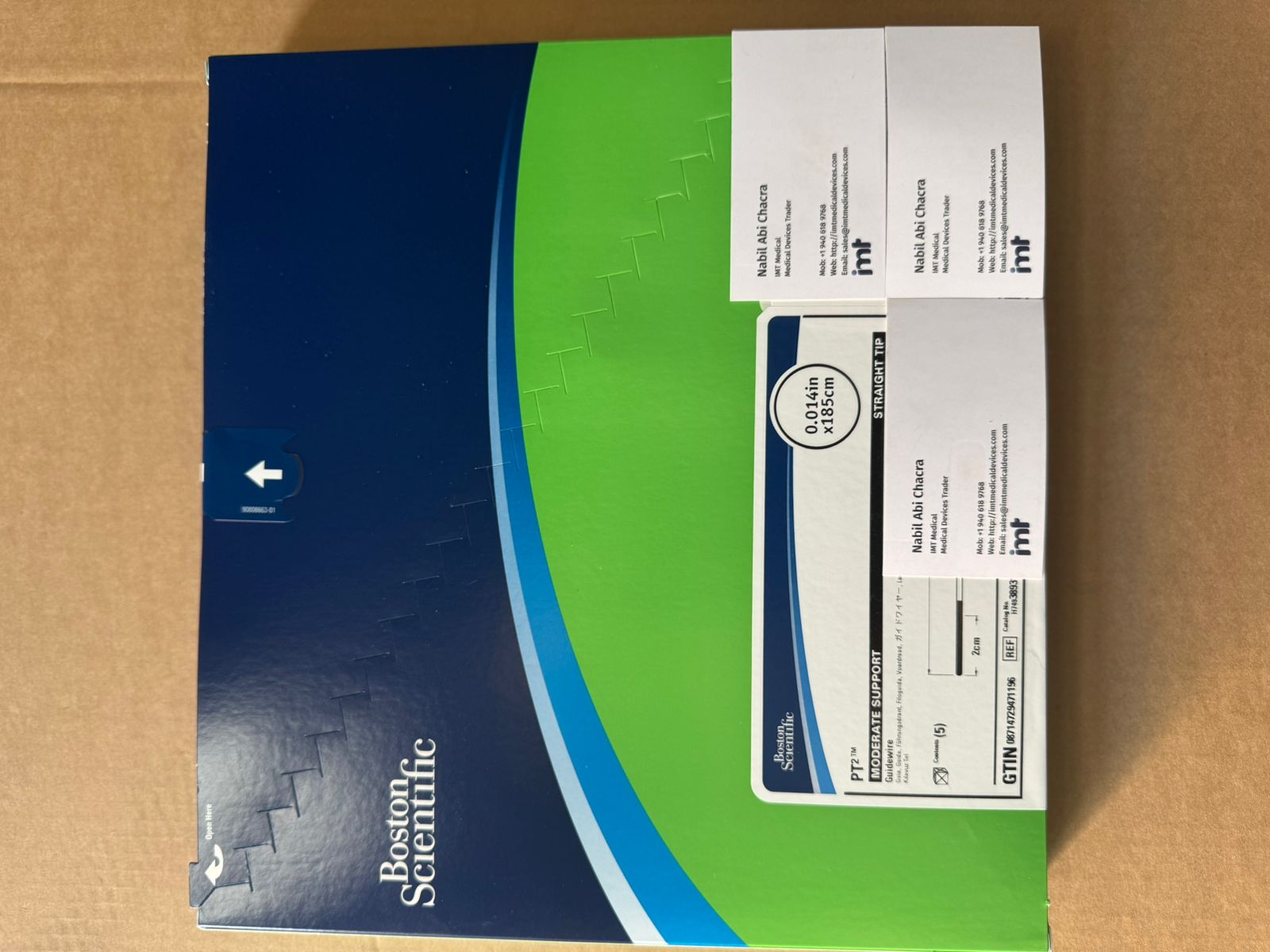
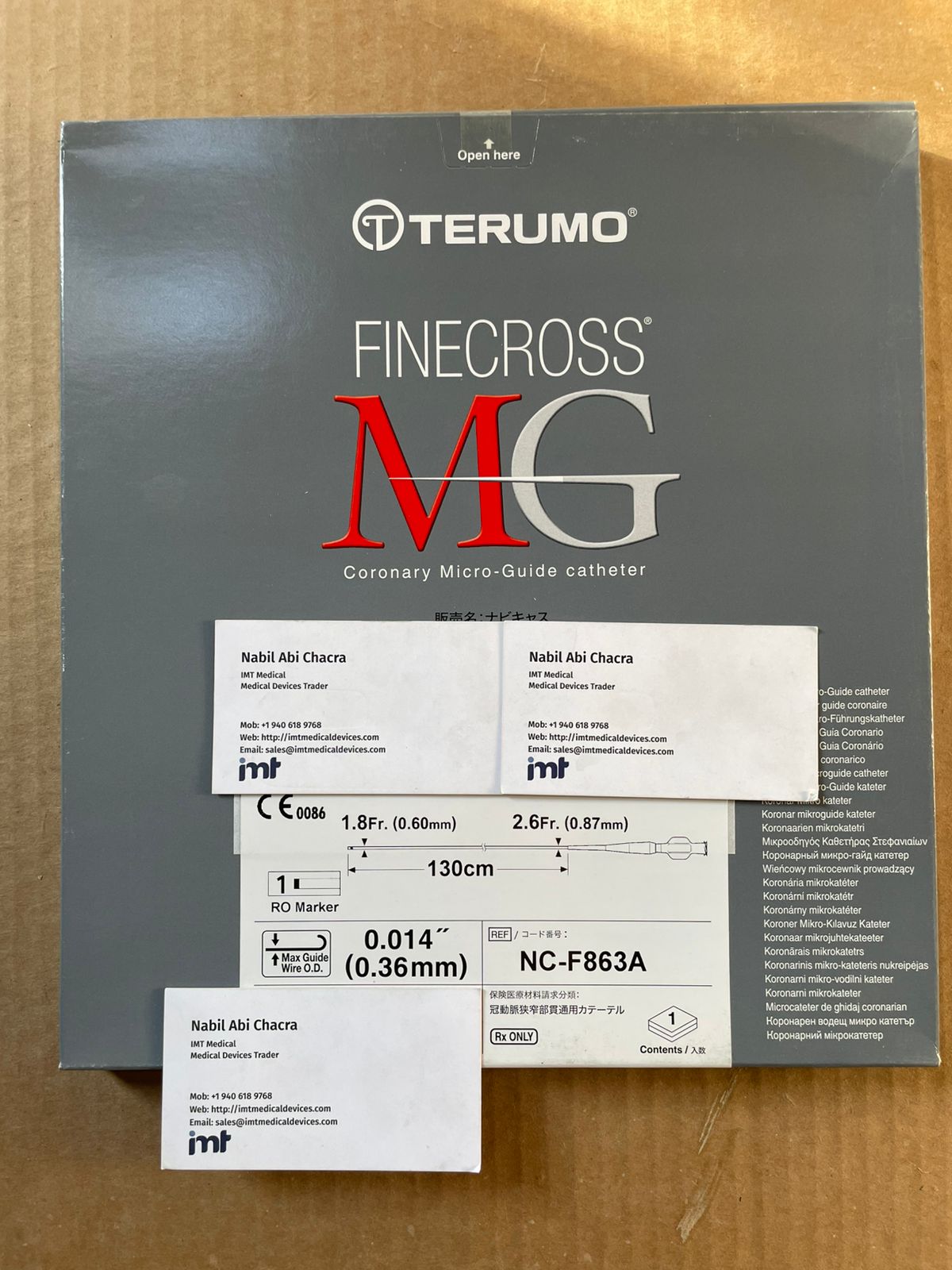
The interventional cardiology segment demands precise technical specifications. A professional exporter provides immediate access to PTCA Balloon Catheters and Diagnostic Guide Wires from Asahi Intec and Cordis. Inventory lists must include specific identifiers for Peripheral Stents and Neurovascular coils. For detailed technical identifiers and SKU-level data, procurement teams should refer to Coronary Intervention products. This allows for rapid comparison of balloon diameters, wire stiffness, and coating technologies across different brands.
Advanced Surgical and Implantable Technology
Procurement for hospital tenders often requires a mix of surgical and implantable hardware. This includes Surgical Staplers and Electrophysiology Catheters. Sourcing Implantable Cardioverter Defibrillators (ICDs) requires validated shelf-life and sterility documentation. Exporters manage these requirements through specialized climate-controlled storage. Pricing models vary between manufacturer-specific contract rates and spot-market wholesale pricing. Spot-market options provide immediate solutions for urgent inventory gaps. Contract rates offer stability for long-term supply agreements. Effective sourcing strategies utilize both to maintain optimal stock levels without overextending capital.
Supply Chain Integrity: Logistics and Cold Chain Management
A medical devices exporter Europe prioritizes physical product integrity over simple transport. Shipping high-value hardware requires more than standard courier services. Maintaining cold chain integrity is essential for sensitive cardiology implants and biologics. These items require climate-controlled environments from the factory floor to the clinical setting. Real-time temperature monitoring and GPS tracking mitigate the risks associated with high-value cargo. Insurance protocols are standard for every shipment of Permanent Pacemakers or Drug-Eluting Stents. This ensures financial protection against transit damage or delays.
Specialized handling protocols define professional Medical Device Distribution. This involves vibration-resistant packaging and sterile-seal protection for delicate interventional tools. Export documentation fees are a necessary component of this process. They cover the costs of regulatory filings and logistical compliance audits. These fees ensure that every shipment meets the legal requirements of both the origin and destination countries. You can contact our logistics team to discuss specific shipping requirements and volume-based freight rates for your region.
Logistics Optimization for B2B Export
Air freight remains the preferred method for long-distance international export. It offers the highest level of security and speed for time-sensitive clinical hardware. Road transport is a viable alternative for regional European supply chains where transit times are predictable. Strategic regional warehouse positioning in Poland and Turkey reduces delivery windows significantly. Managing specialized packaging is critical for sterile surgical instruments and guidewires. Every package must withstand the physical pressures of transit without compromising the inner sterile barrier. Localized inventory allows for rapid dispatch when clinical demand is urgent.
Documentation and Export Fees
International shipping involves various documentation and export fees. These typically include customs management, notarization, and chamber of commerce certifications. Specialized handling for sensitive medical equipment often incurs additional surcharges. These costs reflect the increased labor and monitoring required for high-risk clinical hardware. Accuracy in packing lists and commercial invoices is mandatory. Discrepancies lead to customs seizures and clinical downtime. A professional exporter manages these details to ensure seamless border crossings. This administrative precision is as vital as the physical transport itself. It ensures that PTCA Balloon Catheters and other consumables arrive ready for immediate clinical use.
IMT Medical Devices: Strategic Export Solutions
IMT Medical Devices positions itself as a premier global partner in the medical supply chain. We operate as a high-capacity wholesaler and exporter serving over 50 countries. Our logistical framework supports the rapid distribution of specialized hardware to international markets. We maintain an extensive inventory of authentic technology from industry leaders. This includes Medtronic Products, Terumo Products, and Boston Scientific Products. By acting as a medical devices exporter Europe, we provide procurement professionals with a single point of access for diverse clinical needs. Our operations focus on clarity, product availability, and logistical speed. We don't just move boxes. We manage the vital link between Tier-1 manufacturers and global healthcare providers.
Regional Advantages and Global Reach
Our strategic office locations provide distinct logistical benefits for B2B partners. The Poland facility functions as a primary gateway to the European Union market. It handles the rigorous documentation required for MDR compliance and mandatory EUDAMED registration. Our offices in Georgia and Turkey serve as essential hubs for transit into Central Asia and the Middle East. These locations offer geographic proximity to emerging healthcare sectors and specialized customs expertise. The Dubai hub facilitates global redistribution. It provides a tax-efficient environment for the storage of Drug-Eluting Stents and Permanent Pacemakers. This multi-regional presence minimizes lead times and optimizes shipping costs. We leverage these hubs to ensure your inventory is never more than a few days away.
Why Partner with IMT Medical Devices?
Choosing IMT ensures access to a comprehensive portfolio of interventional hardware. We supply coronary intervention tools, peripheral intervention hardware, and neurovascular products. Our team manages the entire export lifecycle. This includes handling PTCA Balloon Catheters and Diagnostic Guide Wires with 100% documentation accuracy. We prioritize supply chain execution and technical identifier precision. Every shipment undergoes strict quality checks to verify sterility and shelf-life. Our experience in high-value cargo logistics prevents the administrative errors that cause border seizures. For detailed information on our distribution capabilities and partnership inquiries, consult the IMT Company profile. We offer the scale and reliability required for large-scale hospital tenders and private healthcare procurement.
Securing Strategic Access to Premium Medical Technology
Maintaining a reliable flow of clinical hardware requires a partner with localized regulatory expertise and high-capacity logistics. The 2026 landscape demands strict MDR compliance and mandatory EUDAMED registration for all market participants. Successful procurement relies on consolidated B2B models that provide immediate access to Tier-1 inventory from manufacturers like Medtronic, Boston Scientific, and Abbott. As a leading medical devices exporter Europe utilizes for global reach, IMT Medical Devices manages the complex documentation and cold chain protocols necessary for international transit. We ensure that every shipment of Drug-Eluting Stents or Pacemakers meets the highest technical and administrative standards through rigorous quality management.
Our strategic offices in Poland, Turkey, Georgia, and Dubai function as critical redistribution hubs. These locations reduce lead times and ensure supply chain integrity for sensitive cardiology and surgical equipment. We currently export to over 50 countries, bridging the gap between major manufacturers and international clinical settings. You can Request a wholesale quotation for premium medical devices to secure your inventory pipeline and optimize your procurement budget. Establishing a structured sourcing strategy today ensures long-term operational stability and clinical excellence across your facility network.
Frequently Asked Questions
What are the main requirements for exporting medical devices to Europe?
Main requirements include CE marking, mandatory EUDAMED registration, and ISO 13485:2016 certification for the distributor. A medical devices exporter Europe must also ensure that all technical documentation is accessible to national authorities. For non-European producers, an Authorized Representative must be appointed to handle legal responsibilities within the Union. These requirements ensure that every item in the supply chain meets current safety and performance benchmarks.
How does the EU MDR affect medical device exporters?
The EU Medical Device Regulation (MDR) increases the demand for clinical data and technical documentation. It requires mandatory registration of all devices in the EUDAMED database as of May 2026. Exporters must manage Unique Device Identification (UDI) data for every shipment to ensure full traceability. The regulation also imposes strict deadlines for legacy devices, specifically Class III implantables which faced a May 2026 compliance cutoff.
Which brands are most commonly exported by European medical wholesalers?
European wholesalers frequently export Tier-1 brands such as Medtronic, Boston Scientific, and Terumo. Other common brands include Abbott, Cordis, and Asahi Intec. These manufacturers are preferred for their established reputations in interventional cardiology and neurovascular treatments. Wholesalers maintain ready stock of these brands to support hospital tenders and private clinical demand across international markets, providing a reliable bridge to premium technology.
What is the role of a Free Sale Certificate in medical device export?
A Certificate of Free Sale (CFS) confirms that the medical hardware is legally sold in the country of origin. This document is essential for clearing customs in many non-European territories. It provides regulatory assurance to the destination country that the devices meet the standards of the exporting nation. Without a CFS, many international regulatory bodies won't grant import permits for high-risk clinical hardware.
How do exporters ensure the sterility of medical devices during international shipping?
Sterility is maintained through specialized vibration-resistant packaging and double-barrier sterile seals. Exporters utilize climate-controlled transit to prevent the physical degradation of packaging materials. Every shipment is handled according to ISO 13485 standards to ensure physical integrity. This prevents contamination of surgical staplers, guidewires, and catheters during long-distance international air freight or road transport through regional hubs.
Are there specific logistics requirements for drug-eluting stents?
Drug-eluting stents require strict temperature monitoring and cold chain logistics. These devices contain sensitive pharmacological coatings that degrade if exposed to significant temperature fluctuations. Validated climate-controlled containers and real-time GPS tracking are standard for these shipments. These protocols ensure that the therapeutic efficacy of the stent remains intact from the warehouse to the catheterization lab without any compromise in sterility.
What are export logistics and documentation fees for medical devices?
Fees cover the administrative costs of notarization, chamber of commerce certification, and mandatory customs filings. These charges reflect the labor required for regulatory documentation accuracy and legal compliance. Specialized handling surcharges may also apply for sensitive or high-value clinical equipment. These fees are necessary to ensure that every shipment complies with the legal requirements of both origin and destination countries.
How can a distributor verify the authenticity of exported medical devices?
Authenticity is verified through Unique Device Identification (UDI) and serial number tracking. Every device arrives in factory-sealed packaging with intact manufacturer labels and technical identifiers. Distributors compare these codes against official manufacturer databases to confirm the production origin. This process prevents the entry of counterfeit hardware into the clinical supply chain, ensuring patient safety and device performance standards are met.